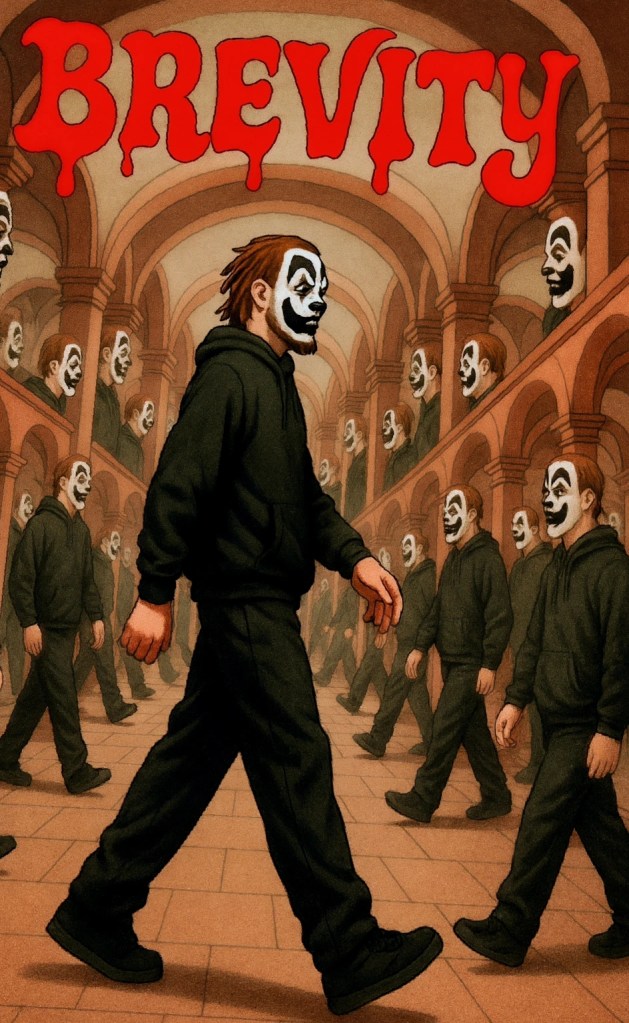
I make AI music. I use Suno, I’ve built my own workflow around it, and I’ve made songs that would make one specific type of guy throw his phone across the room. This isn’t a hit piece from someone who has never touched the tools.
The money
Suno is the biggest company in AI music. In June 2026 it raised more than $400 million at a $5.4 billion valuation. Seven months earlier it was worth $2.45 billion. Its CEO said in February that Suno had 2 million paying subscribers and $300 million in annual recurring revenue.
The industry expects more. Global Industry Analysts valued generative AI in music at $642.8 million in 2024 and projects $3 billion by 2030. Goldman Sachs projects direct AI music revenue of $2.1 billion by 2030 in its base case. All recorded music brought in $31.7 billion in 2025.
The price
Suno Pro costs $10 a month, or $8 if you pay for a year. That buys about 500 songs, which works out to about two cents each. The free plan gives you around 10 songs a day, but you can’t use them commercially.
Since September 3, 2026, there’s a catch. Pro users can download only 20 songs a month. Premier users get 60. The caps came out of Suno’s settlement with Warner Music. You can make 500 songs a month and take 20 of them home.
Nobody is listening
Deezer tracks AI uploads more closely than any other streaming service. In January 2025 it received about 10,000 AI tracks a day. By June 2026 it was about 90,000 a day, more than half of all new uploads.
Almost none of it gets heard. In April, AI tracks made up 44% of new uploads and only 1 to 3% of streams. Deezer also found that up to 85% of streams on fully AI tracks in 2025 were fraudulent. The audience for most AI songs is the person who made them, plus bots.
Spotify says it removed more than 75 million spam tracks in one year. Meanwhile, 97% of people in a Deezer survey couldn’t tell fully AI music from human music.
The guy who got caught
Michael Smith of North Carolina built a catalog of hundreds of thousands of AI songs. Then he ran bots that streamed them billions of times. From 2017 to 2024 he collected more than $8 million in royalties. He routed the bots through VPNs to hide them.
He pleaded guilty to conspiracy to commit wire fraud in March 2026. On October 6, a federal judge gave him 18 months in prison, two years of supervised release, and a forfeiture of $8,091,843.64. Prosecutors called it the first criminal case of its kind.
The AI songs weren’t the crime. The fake listeners were. Having hundreds of thousands of songs let him spread fake streams thin enough that no single track looked suspicious.
The lawsuits
In June 2024, Universal, Sony, and Warner sued Suno for training on their recordings without permission. Warner settled in November 2025 and became Suno’s partner. Universal settled with Suno’s rival, Udio, in October 2025. Universal and Sony are still suing Suno, and Sony is still suing Udio.
In a September 1 court filing, Suno admitted it got training audio from YouTube. On September 9 it launched v6, which it says was trained from scratch on licensed music from Warner, BMG, and Believe. Every older model was retired.
Who owns the song
A paid Suno plan gives you commercial rights. That isn’t copyright. The U.S. Copyright Office says purely AI-generated music can’t be copyrighted. In March 2026 the Supreme Court declined to hear Thaler v. Perlmutter, which left human authorship as a legal requirement. If you type a prompt and press go, you can sell the result. You may not be able to stop anyone from copying it.
Musicians hate this more
Musicians seem angrier about AI than writers or painters. I can’t prove it, because nobody has asked all three groups the same questions in the same survey. The music numbers are still brutal. A survey of more than 15,000 people by France’s SACEM and Germany’s GEMA found 71% feared they couldn’t make a living. A University of Alberta study found 87% of Canadian musicians viewed generative AI negatively. A Tracklib survey of producers found single-digit support for generative AI. Visual artists aren’t far behind: most of 378 professional visual artists in a 2026 Carnegie Mellon survey were strongly opposed.
Music has a reason to be angrier. A painting made with AI still looks like a picture of something. An AI song can sound exactly like a band people paid millions to hear.
The filters
In my experience, the main filter is names. Put a real artist’s name in your lyrics or prompt and it gets blocked. Content is a different story. I can generate songs that are wildly offensive and genuinely hilarious to one specific type of guy, and nothing stops me.
Audio checks are weak too. A short clip of a protected song can get past filters built to catch the whole thing.
My friend’s voice
I uploaded songs my friend released before he died. The model learned his voice. Hearing him rap lines he never wrote was wild.
That’s also where the law starts. Illinois now bans knowingly releasing a recording with an unauthorized digital replica of someone’s voice, and that includes people who have died. Spotify bans unauthorized voice clones too. Making it for myself is one thing. Putting it out would take his family’s permission.
The same tools also do plain speech. No beat, no melody, just a voice saying whatever you type.
Machines that listen
Some AI models can hear the songs now. Manus seemed able to. Google’s Gemini can analyze audio files and detect emotion in speech and music.
So the whole loop already exists. A model writes the song. A bot streams it. Another model listens and reviews it. The only human left in the chain is the one paying $10 a month.
Sources
- Music Business Worldwide: Smith sentenced
- BleepingComputer: Smith forfeiture and VPNs
- Deezer: AI passes 50% of uploads
- Deezer: 44% of uploads, fraud rates
- AlternativeTo: AI is 1 to 3% of Deezer streams
- Variety: Spotify AI safeguards
- Music Business Worldwide: Suno download limits
- Dynamoi: Suno commercial rights by plan
- The Rundown: Suno v6 and YouTube admission
- AI Law Wiki: label settlement status
- AI MusicPreneur: Suno Series D
- iMusician: Suno subscribers and revenue
- Global Industry Analysts: generative AI in music
- Voxbooster: AI music statistics 2026
- Musicologize: Copyright Office and Thaler
- TechXplore: SACEM/GEMA survey
- Billboard Canada: University of Alberta study
- Music Business Worldwide: Tracklib producer survey
- arXiv: Carnegie Mellon visual artists survey
- Illinois Public Act 103-0836
- Google: Gemini audio understanding